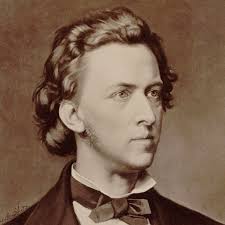
About Frédéric Chopin
Frédéric Chopin was one of the most important composers and pianists of the nineteenth century. He was born in 1810 near Warsaw, in present-day Poland, and became especially known for music written for the piano. His works are admired for their lyricism, elegance, expressive depth, and highly personal musical language.
Chopin showed unusual musical ability from an early age. In Warsaw, he studied piano, composition, and music theory, while also absorbing Polish musical and cultural traditions. This early background remained important throughout his life, especially in works such as mazurkas and polonaises, which carry a strong sense of national style and memory.
Life in Paris
In the early 1830s, Chopin left Poland and settled in Paris, one of the leading artistic centers of Europe. There he entered a rich cultural world of musicians, writers, painters, and patrons. Instead of becoming known mainly through large public concerts, he was especially admired in salons, where his refined and subtle playing style was most effective.
Paris was also the setting for much of his mature creative life. During these years he composed many of the works for which he is best remembered, including nocturnes, études, ballades, scherzos, preludes, and polonaises. His music combines technical brilliance with delicacy and expressive control.
Musical Style
Chopin’s music is closely bound to the piano. He expanded the expressive range of the instrument through singing melodies, flexible rhythm, chromatic harmony, and finely detailed textures. His writing can sound spontaneous and natural, yet it is often carefully structured and highly refined.
He also gave great artistic importance to smaller musical forms. Pieces such as preludes, nocturnes, mazurkas, and waltzes became deeply expressive in his hands. At the same time, larger forms like the ballades and sonatas show his ability to build broader dramatic and emotional designs.
Legacy
Chopin died in Paris in 1849, but his influence has remained central to piano music ever since. His works continue to be performed, studied, and loved by musicians and audiences around the world. For many listeners, Chopin represents a unique union of elegance, longing, virtuosity, and emotional honesty.